AI Term of the Moment
AI prompt
Definition: space datacenters
Datacenters built into satellites to take advantage of unlimited solar energy. Primarily employed for AI, Google (see Project Suncatcher), SpaceX, Blue Origin, Starcloud, Aetherflux and China Aerospace and Technology are involved with space datacenters. Elon Musk (SpaceX) plans to launch the first of one million AI datacenter satellites in 2028. See SpaceX.
Massive Problems to Overcome
As Anastasi in Tech says, "it's time to put the clouds in the cloud." However, it is not that simple. The GPUs need shielding to keep them from harmful space radiation. Although space solar panels are much more efficient, large panels are required, and for a massive AI datacenter a huge array of panels is necessary. Although space is cold, satellites fly in a vacuum. To overcome the difficulty of dissipating heat from the GPUs, radiators the size of football fields must be used, adding massive weight to the satellites as well as cost to launch them into space.
Datacenters on the Moon
Instead of orbital, a proposed option is the moon. However, solar storms require hardened chips and shielding that can cost a hundred times more than regular chips. In addition, state-of-the-art chips might be vulnerable, and if older chips are used, performance slows. In addition, moon dust will gradually degrade the hardware, and to add even more misery, the moon gets 14 days of sunlight and 14 days of darkness. Massive battery storage would be required. In addition, the moon's temperature ranges from 120 degrees Celsius to minus 130. Another problem is transmission to and from the moon takes nearly three seconds compared with up to 50 milliseconds from orbital satellites. It can also cost up to 20 times more to send equipment to the moon than into orbit.
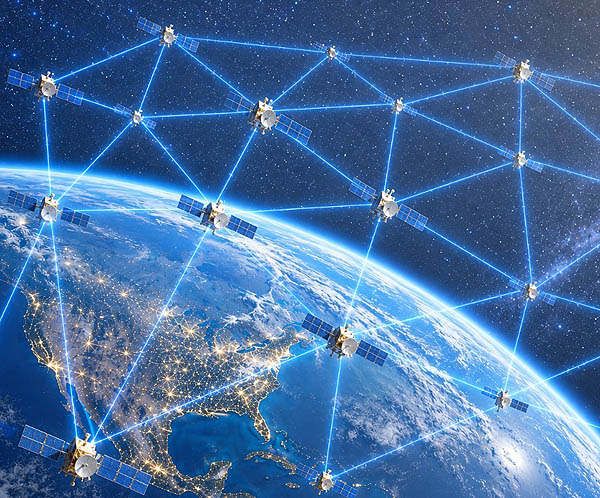
Satellite Datacenters
Massive Problems to Overcome
As Anastasi in Tech says, "it's time to put the clouds in the cloud." However, it is not that simple. The GPUs need shielding to keep them from harmful space radiation. Although space solar panels are much more efficient, large panels are required, and for a massive AI datacenter a huge array of panels is necessary. Although space is cold, satellites fly in a vacuum. To overcome the difficulty of dissipating heat from the GPUs, radiators the size of football fields must be used, adding massive weight to the satellites as well as cost to launch them into space.
Datacenters on the Moon
Instead of orbital, a proposed option is the moon. However, solar storms require hardened chips and shielding that can cost a hundred times more than regular chips. In addition, state-of-the-art chips might be vulnerable, and if older chips are used, performance slows. In addition, moon dust will gradually degrade the hardware, and to add even more misery, the moon gets 14 days of sunlight and 14 days of darkness. Massive battery storage would be required. In addition, the moon's temperature ranges from 120 degrees Celsius to minus 130. Another problem is transmission to and from the moon takes nearly three seconds compared with up to 50 milliseconds from orbital satellites. It can also cost up to 20 times more to send equipment to the moon than into orbit.
Connecting hundreds of satellites together to form a giant AI datacenter is no simple feat, but the benefits seem more than worth it.